Connecting Ethnobotany and Archaeology at our Native American Heritage Garden
To fully grasp the narrative of any place, culture, or people, one must recognize that the relationship between plants and mankind is deeply intertwined, and learning how people past and present have used native plants offers key insight for studying a region’s archaeology. At our latest interpretive garden walk workshop, VVAC’s Ethnobotanist Rob Estrada shared the Indigenous uses of local plants at our Native American Heritage Garden and Pathway, linking them to the histories and people of the Verde Valley.
Estrada holds a Master's Degree in Public History from Northern Arizona University, with an emphasis in Southwestern borderlands and a minor in Southwestern Archaeology. Estrada worked for the National Park Service in the Natural Resources Department in Yosemite and was a Staff Volunteer at Montezuma Well where he managed the Traditional Garden from 2015 to 2019.
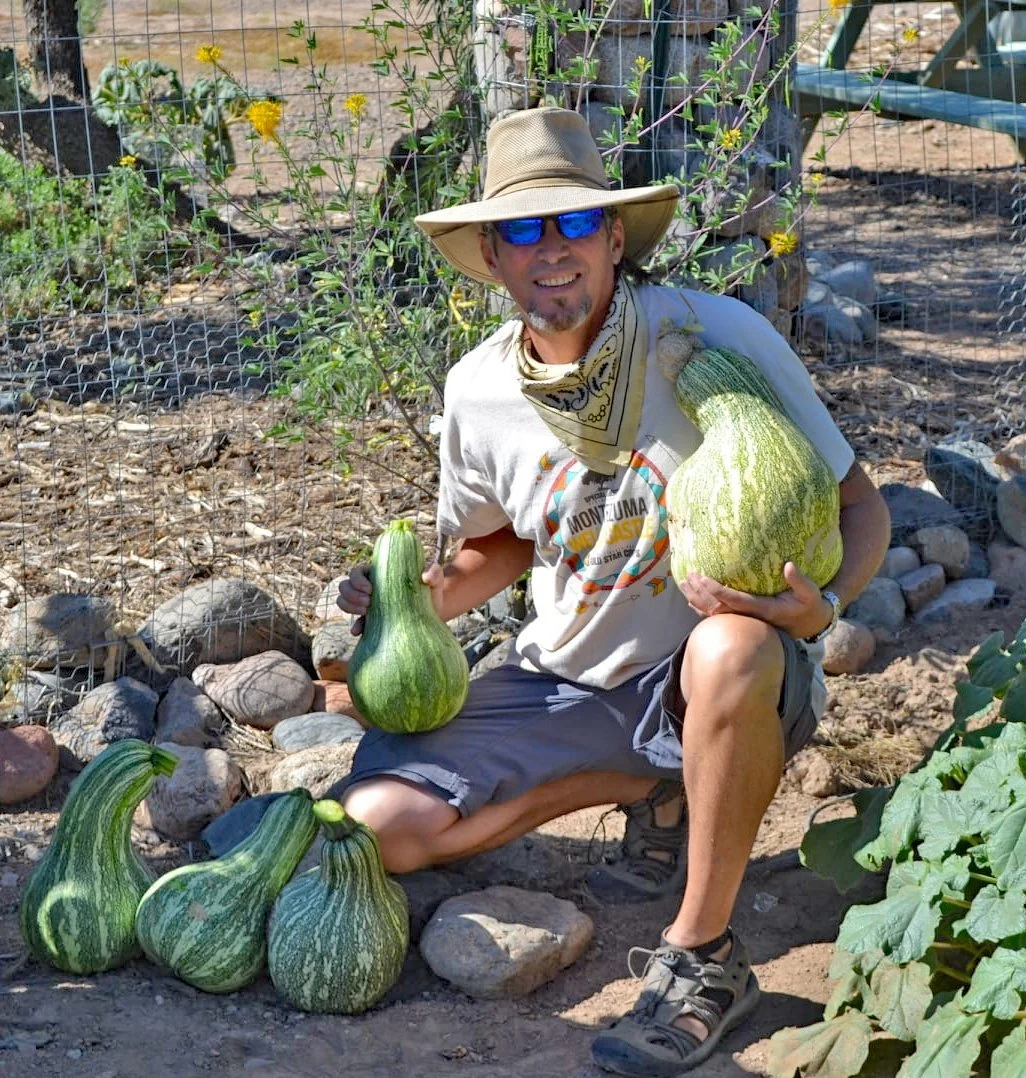
“I've been growing stuff since I was a kid, and I've always had an interest in wild things and wild places, so botany was a natural progression for me,” Estrada said. He also works at Northern Arizona University where he conducts Road Scholar tours.
During the interpretive garden walk, Estrada pointed out both native and invasive plants that are edible and/or medicinal. Many non-native plants, like buckwheat and tarragon, are edible but considered invasive. Amaranth, a native plant that grows across the Verde Valley, is entirely edible. Its leaves can be used like lettuce in a salad and its seeds can be ground to make flour.
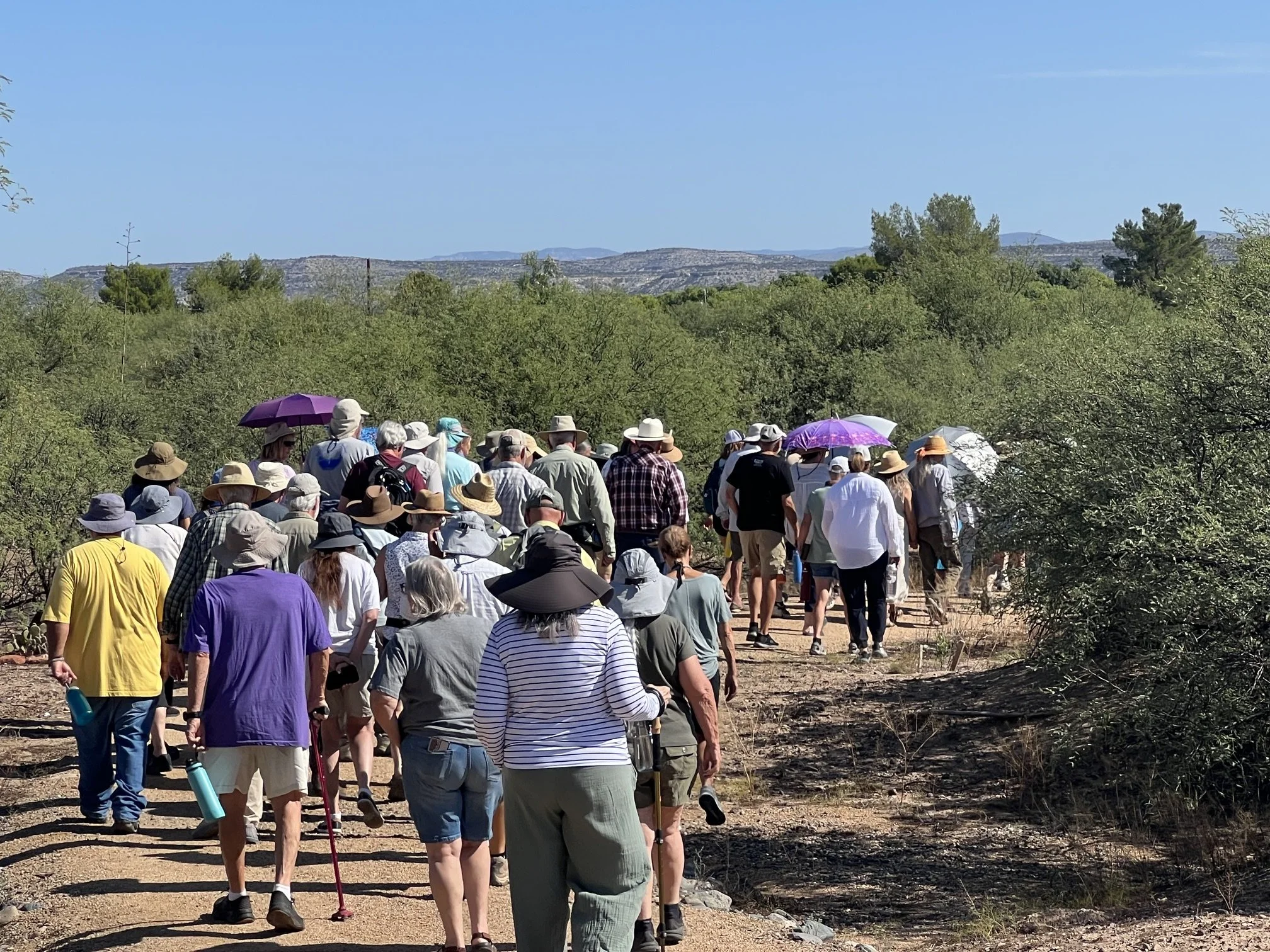
“We were pleasantly surprised by the turnout of visitors to the garden,” VVAC’s Executive Director, Monica Buckle said about the nearly 70 attendees. “It was testament to how there is an interest and a public demand for land-based programs and learning about endemic species specific to the Verde Valley.”
Estrada shared tips for juicing prickly pear fruit and how nutritious the beans of mesquite pods are. The Native people in the area have historically ground mesquite pods into a sweet-tasting flour that can be saved indefinitely without refrigeration. Most of the globe mallow plant is edible and can be found in areas where deer and javelina can’t reach it.
“When I was a kid, my dad would tell me, ‘Watch what the animals eat, because if the animals eat it, you can eat it," Estrada said. “My dad was an Army Ranger Instructor, and he taught the wilderness survival portion of the course for Army Rangers. He got me interested in this stuff when I was a kid, because when I was a Boy Scout, we went on hikes and he would point out the different edible plants. When I grew up, my dad taught me a lot of this knowledge.”
Medicinal plants that grow in the Verde Valley include devil’s claw, which is a natural blood thinner and is found wherever there’s a perennial water source in the region. The bark of desert willow, which has a richly colored pink flower, is an analgesic and can be used like aspirin. This tree often grows adjacent to mesquite next to the region's washes and highways.
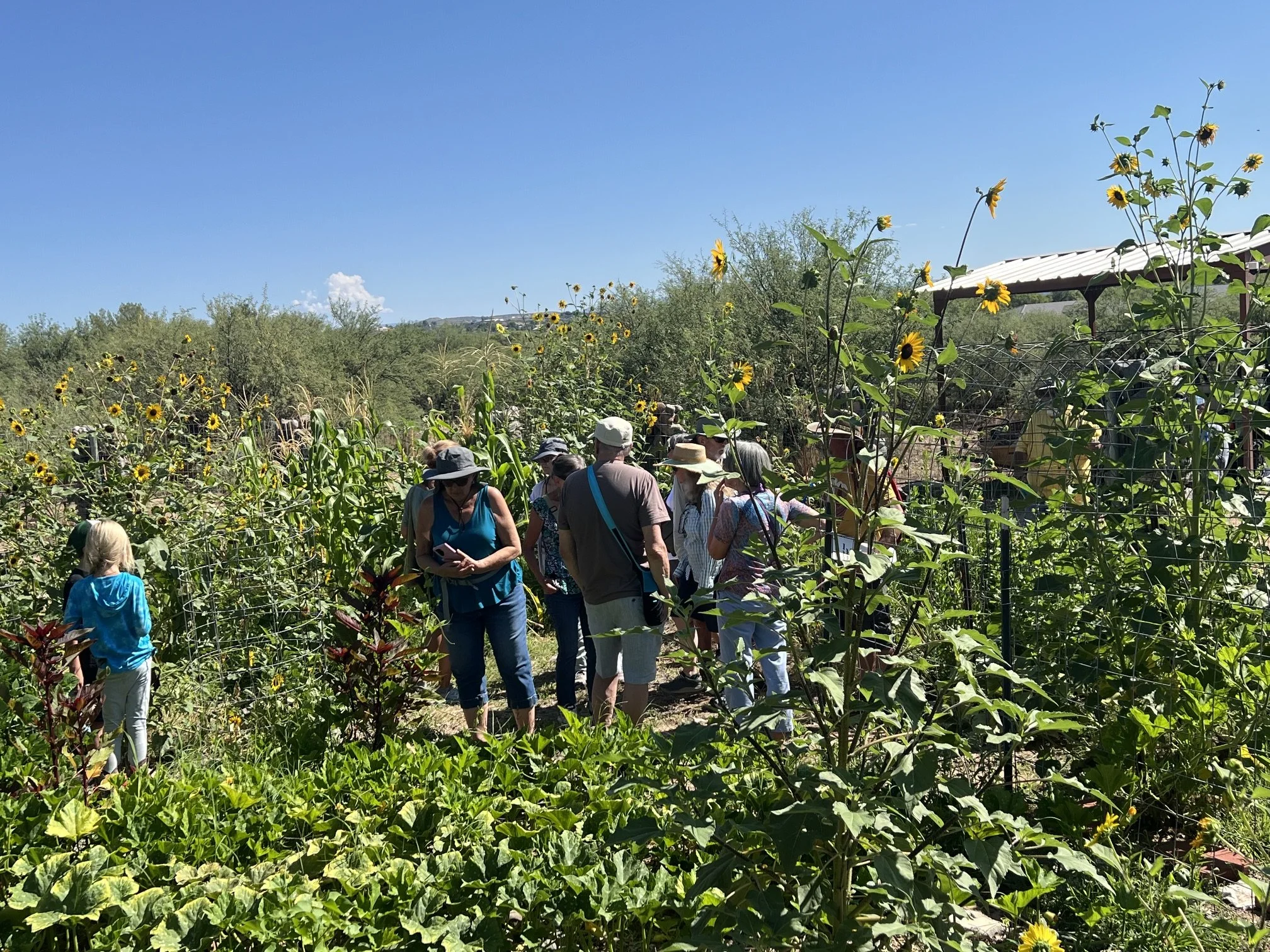
“In The Dyck Cliff Dwelling Collection that we steward, exists an immense botanical collection that includes 8,000 corn cobs, agave quids, amaranth seeds, squash seeds, nuts, and more,” Buckle said. “The Native American Heritage Garden and Pathway is parallel to our collections because one gets to see not only how the land has been in perpetuity, but how these endemic species are being threatened by environmental condition changes.”
“Having an endemic garden is critical to VVAC's mission because not only does Rob cultivate different species, but the seeds for specific plants are used in scientific research,” Buckle continued. “It's more than just a bucolic setting. It's a living laboratory.”
There are currently four agave species endemic to the region growing in the garden. VVAC has an inventory share agreement with Desert Botanical Garden in Phoenix where VVAC’s garden supplies agave pups in exchange for adult plants.
“Agave was like a one-stop shop for survival,” Estrada said. The fibers of the agave were used in weaving and to make sandals, traps, and netting. The needles from the plant could be used in leatherwork. During the monsoon season, if the heart of the plant was cut out, it would fill up with water and ferment, creating a sweet drink called pulque.
“It was like a natural lemonade out in the middle of the desert,” Estrada explained. “The native people, as they were crossing on foot, knew that every so many miles there would be a century plant that they could get the sweetened water out of.”
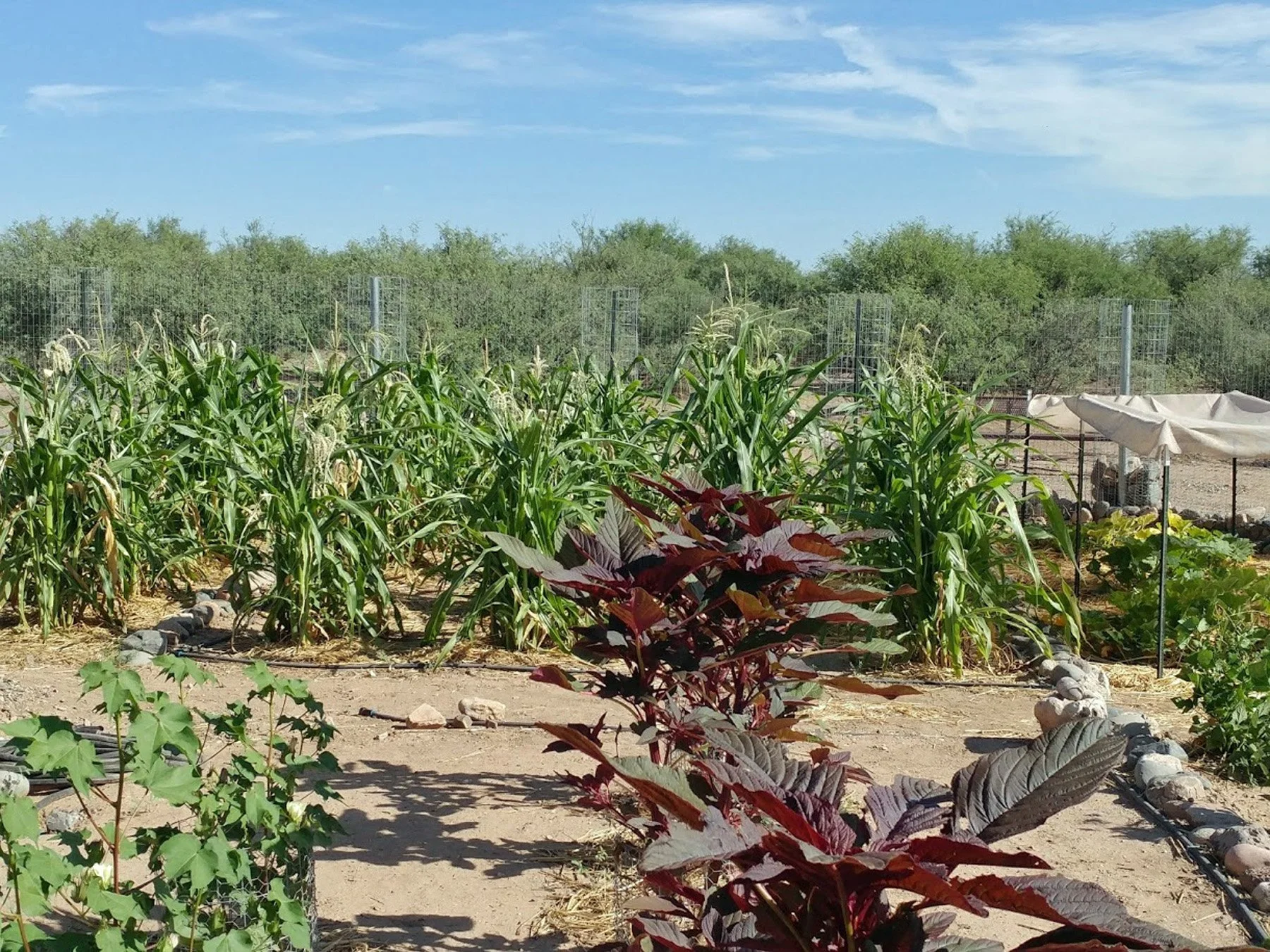
Estrada and Walter Trevisan, VVAC Volunteer and retired seed industry corn breeder, are in their third-year of a corn study with Iowa State University. Estrada and garden volunteers have been growing and evaluating different heritage varieties of corn to see which adapt to the local environment best.
Because of the success of July’s garden event, VVAC is hosting a members-only Harvest Corn Study event on Saturday, September 26th. A limited number of participants will be assigned a row of corn to harvest and the count of ears will be entered into a spreadsheet to determine which three varieties were most successful in the region’s challenging environment. From those successful varieties, Estrada will receive an inventory of seeds to have in an emergency seed bank for gardens that can succeed in the Verde Valley’s hot and dry conditions without a lot of fertilizer. While not part of the official study, Estrada is also experimenting with squashes to see which species thrive best here.
“A thousand years ago, something that's growing in your yard that you think is a weed could have been used to either help you survive, either from the caloric intake of the plant or because of its medicinal purposes,” Estrada said. “I want people to look in their own yards and realize that some of these weeds that are growing are edible or medicinal.”
Estrada described Ethnobotany as the marriage of plants and humans. “Human beings and plants have always had a relationship, and this relationship is integral if you're studying archeology,” he stated. “Why did people make ollas? As granaries for their food. To contain foodstuffs and plants that could save their lives during the winter, for instance.”
The placement of prehistoric peoples’ homes, like the cliffside dwellings common to the Verde Valley, were most likely positioned to overlook fields that they cultivated.
“To understand the archaeology, it's really important to understand the relationship these people had to their plants,” Estrada continued. “You really can't separate the two because if you do, you're missing a huge part of the information needed to understand how these people lived a thousand years ago and beyond.”
The relationship between plants and the weather is also fundamental to understanding aspects of archaeology, exhibited in the various solar calendars across the region. Knowing the time of day and year was crucial for getting the optimal amount of produce from cultivation, by knowing when to plant, when the first frost will be, etc.
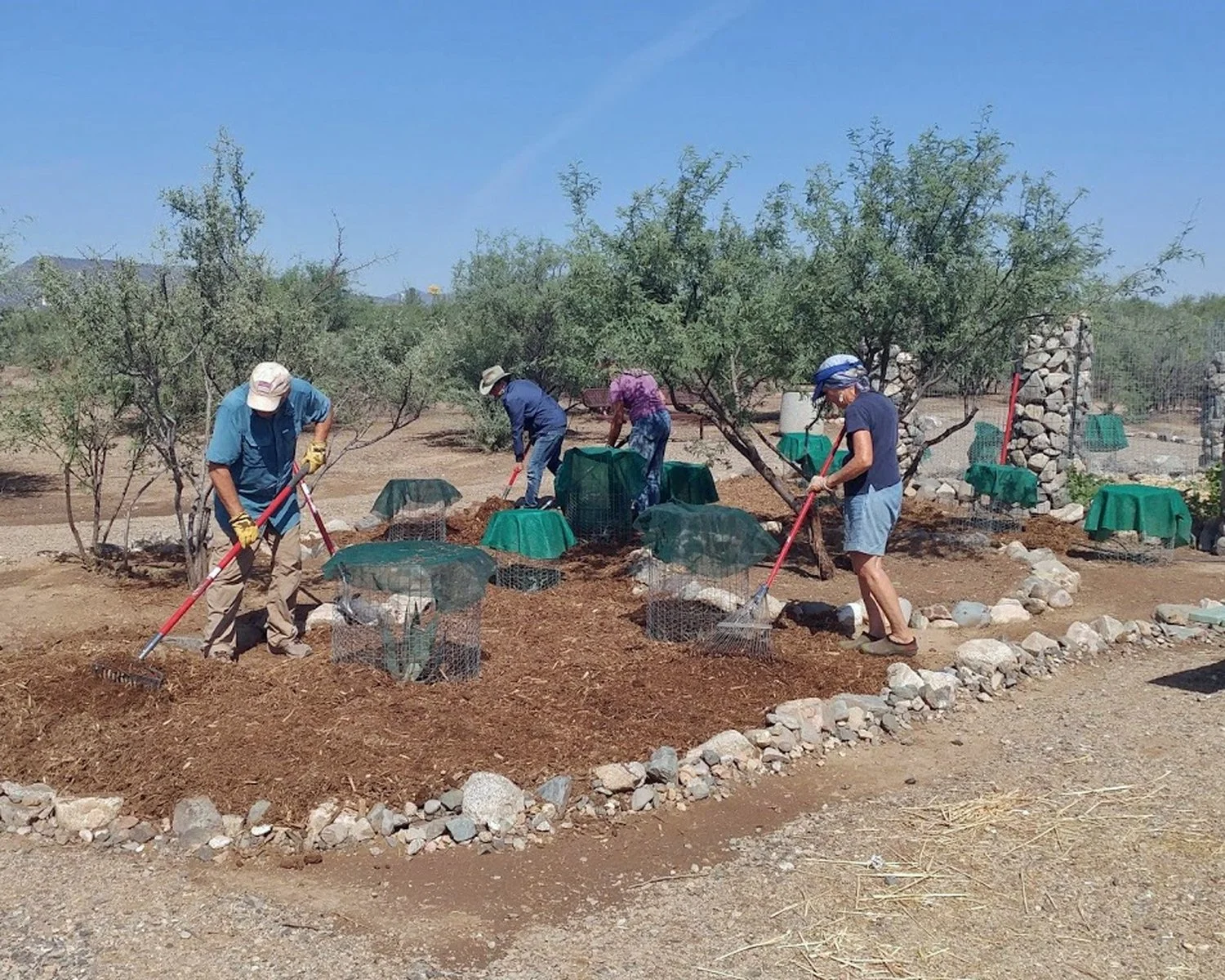
“I want to give special mention to Donna, James, and Robert, the trio of garden volunteers who are extremely committed and serve as Earth stewards to this incredible property,” Buckle said. “Because of their civic-mindedness, not only does the museum boast this garden property, but the Town of Camp Verde can say it enhances the quality of life for local residents, and that's attributed to the volunteers, and of course Rob Estrada, who manages and supervises all aspects of the garden. Rob is very much big picture with the garden and is always willing to work with accredited organizations for the betterment of the property and furthering research.”
The garden and pathway is owned by VVAC but it is a free, public use space and residents are welcome to enjoy it during the garden’s hours from 8 a.m. to 4 p.m. VVAC also installed several state-of-the-art security cameras at the garden property and new signage to mitigate any possible vandalism.