This January, the Verde Valley Archaeology Center and Museum unveiled “Weaving Cultural Threads: Highlights from Our Permanent Collection,” our latest exhibit that explores connections linking cultures across time and space while showcasing items that rarely get displayed.
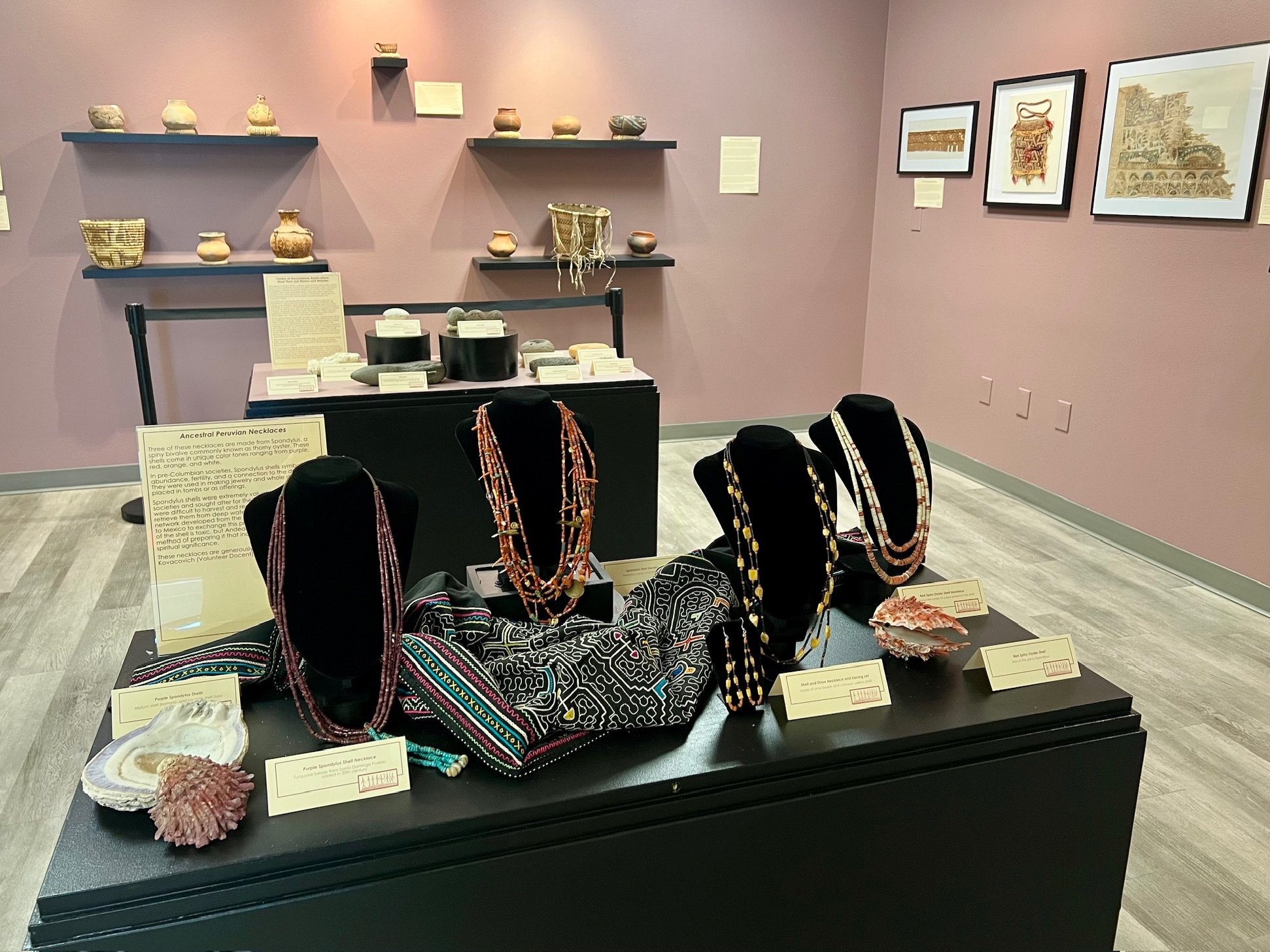
This exhibit features items from the Kovacovich Textile Collection, an assortment of textiles from the Peruvian coast donated by Volunteer Lynette Kovacovich. This is the first time that material from this collection is on public display. In the early 1970s, Lynette backpacked and hitchhiked extensively throughout South America. During a trip from Colombia down to Chile, she spotted textiles for sale along the road but had no means to carry them. For the journey back, she purchased a 1931 Plymouth pickup and collected the textiles that are on display today. While many prehistoric textiles are typically destroyed by moisture, these textiles were remarkably preserved by the desert climate of Peru’s southern coast.
The weavers of pre-Columbian Peru were known for their sophisticated weaving techniques developed well before concurrent cultures and the Spanish arrival in the 1500s. These master weavers excelled at developing intricate weave structures with very simple tools.
Most of the textiles on display were woven after 1600 AD, but represent the techniques developed prior to the Spanish. The scope of work showcases the technical skill, structural variety, and creativity of Peruvian weavers, from the reciprocal patterns of double weave to anthropomorphic decorations crafted with an inked stamp.
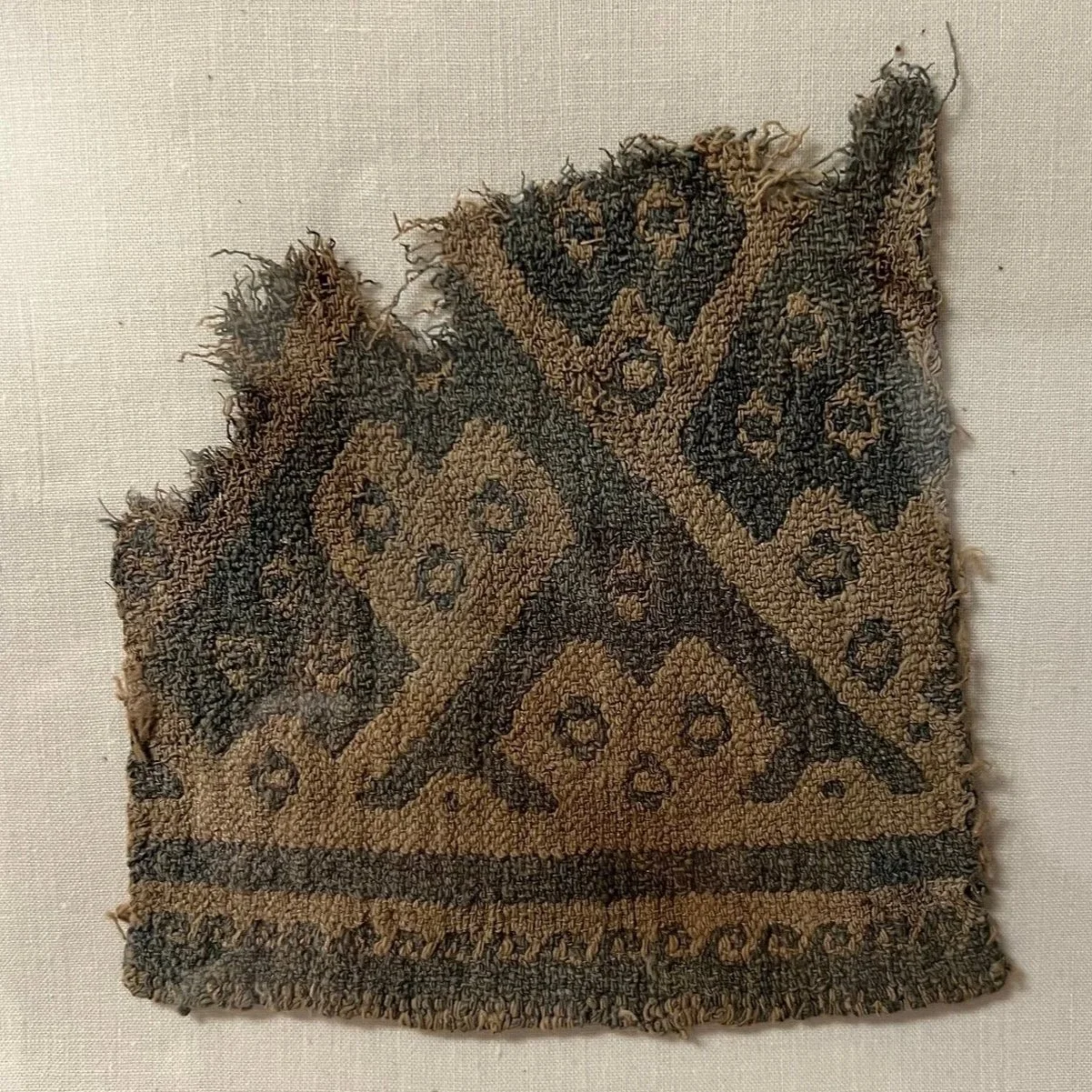
With the double weave technique, both the color and image are reversed on opposite sides of the fabric. One fragment made using this method features an interlocking feline motif where the cats’ eyes appear to open and shut on either side of this piece, showing the weaver’s humor and skill.
Beyond technique, these textiles offer glimpses into the daily and spiritual lives of Peru’s coastal communities. The exhibit explores motifs common in prehistoric Peru and other cultures of the Andean region, such as cats, condors, octopuses, and fish. One item, a coca bag, was used to carry coca leaves for medicinal and ceremonial purposes. Coca leaves were chewed or made into a tea as a natural remedy for altitude sickness or as a mild stimulant to boost stamina at high altitudes. This ancient practice still carries cultural significance and is used today among Andean communities.
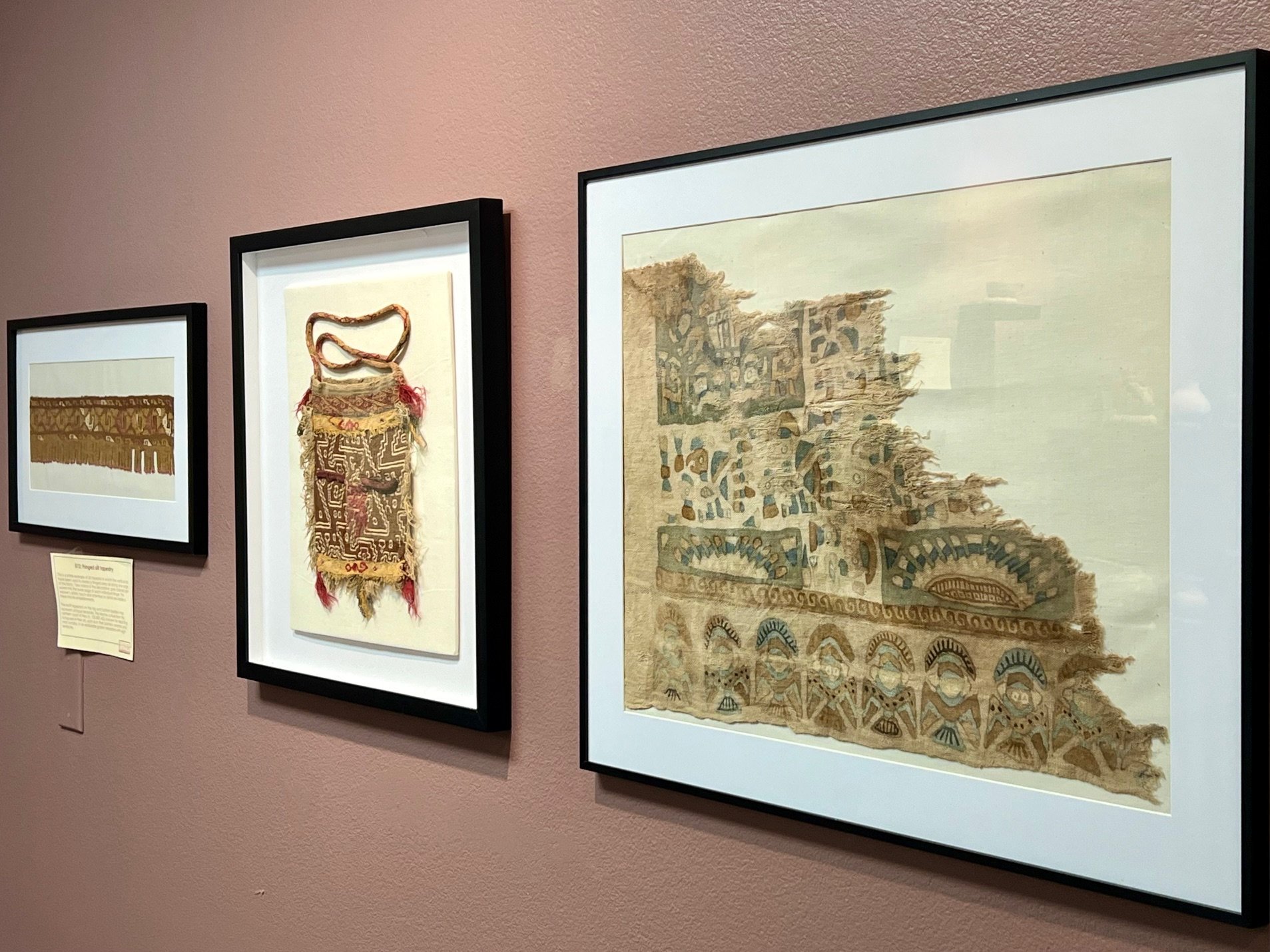
While Peruvians mastered the art of weaving, similar innovations arose independently around the world. The pieces on view illuminate parallels with textiles from the Dyck Collection, shedding light on our knowledge and understanding of the Hisatsinom (Sinagua) who inhabited the Dyck Cliff Dwelling. For example, weavers in both the Verde Valley and Peru developed the slit tapestry technique despite being an ocean apart.
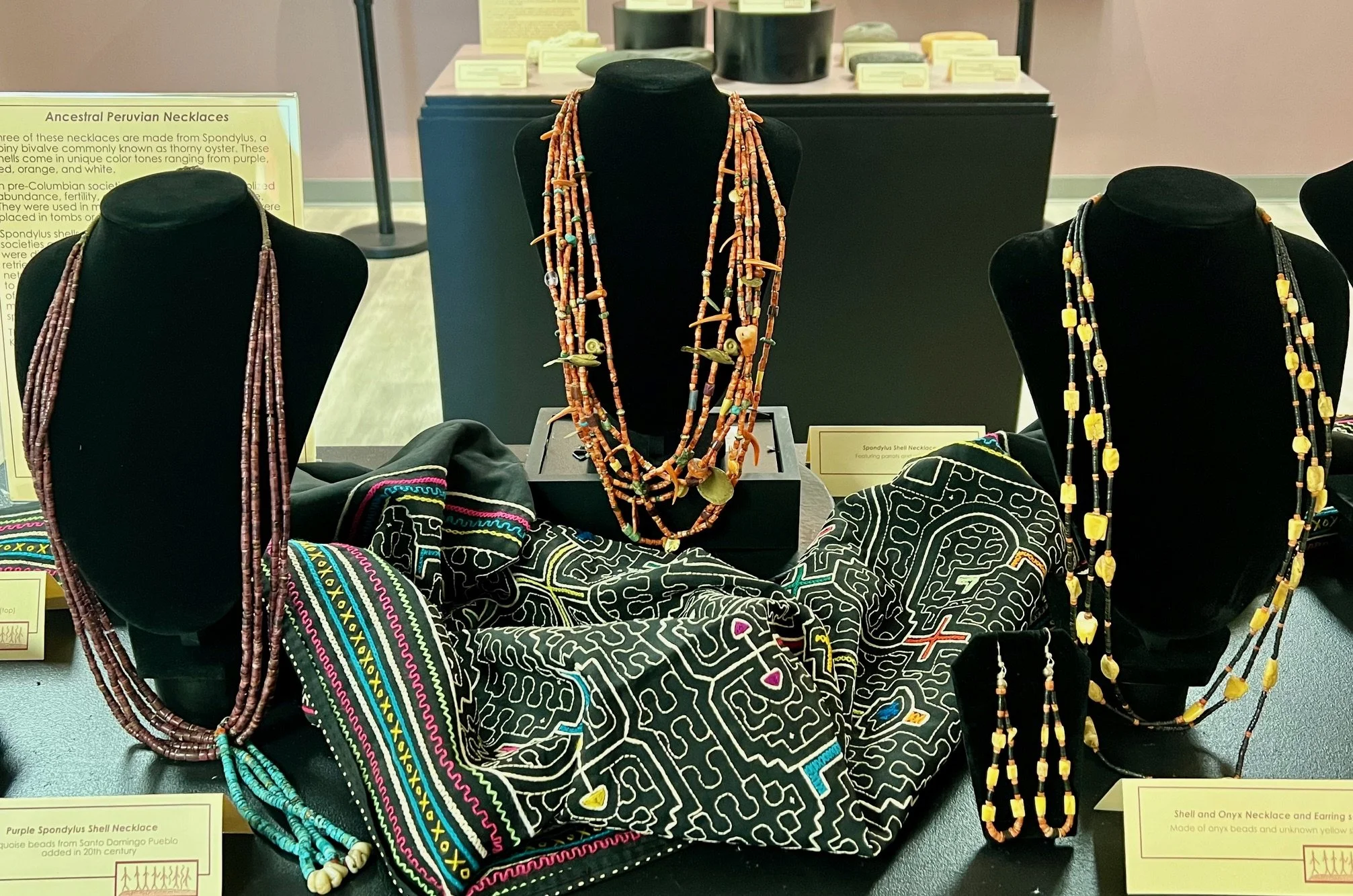
Lynette, an accomplished jeweler and silversmith, also acquired Peruvian necklaces that are on loan for the exhibit. These adornments are primarily made from Spondylus shell, which was extremely valuable in Andean societies and sought after for its vibrant colors. An extensive trade network developed from the coasts of Peru and Ecuador to Mexico to exchange this prized commodity.
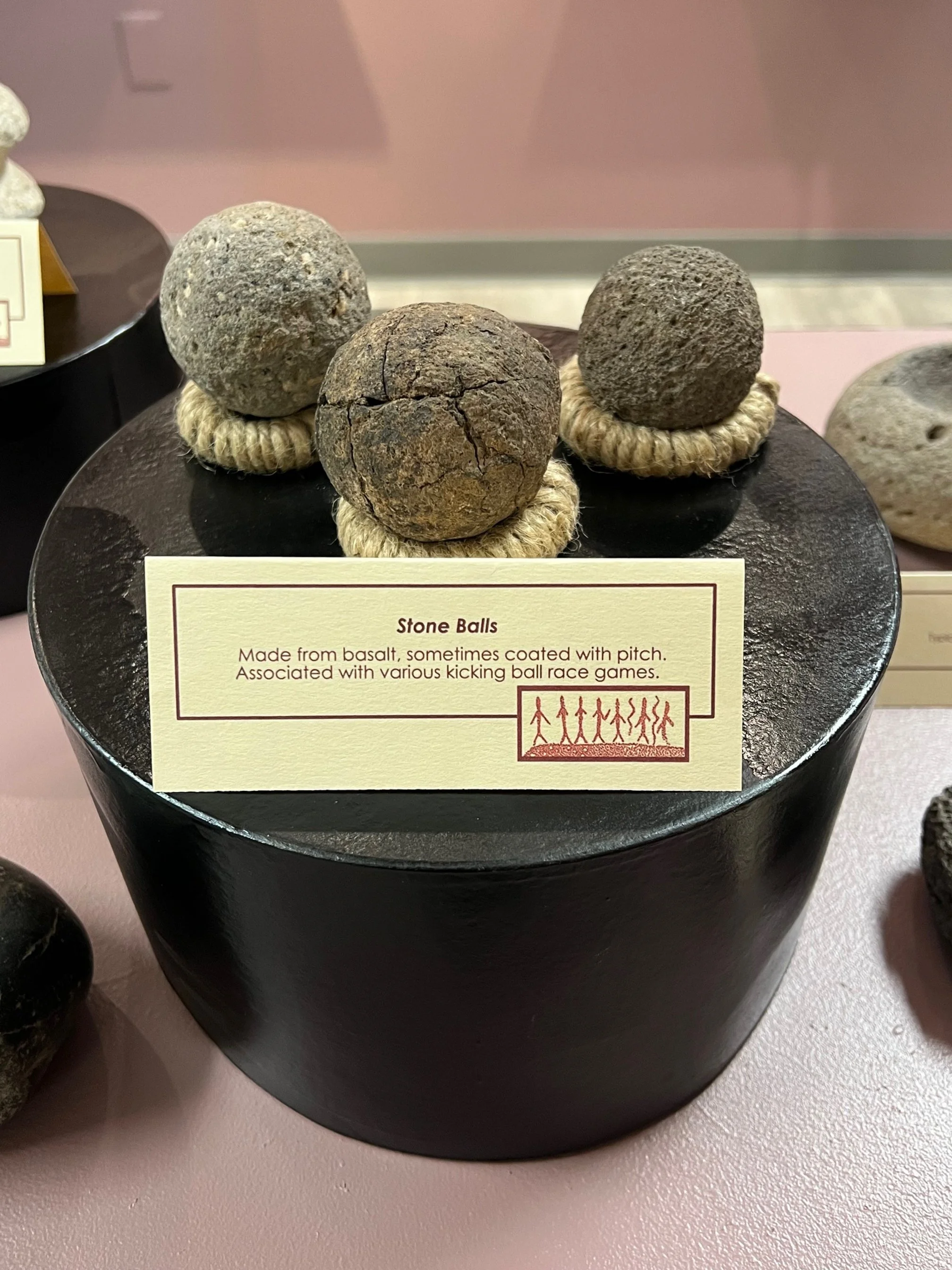
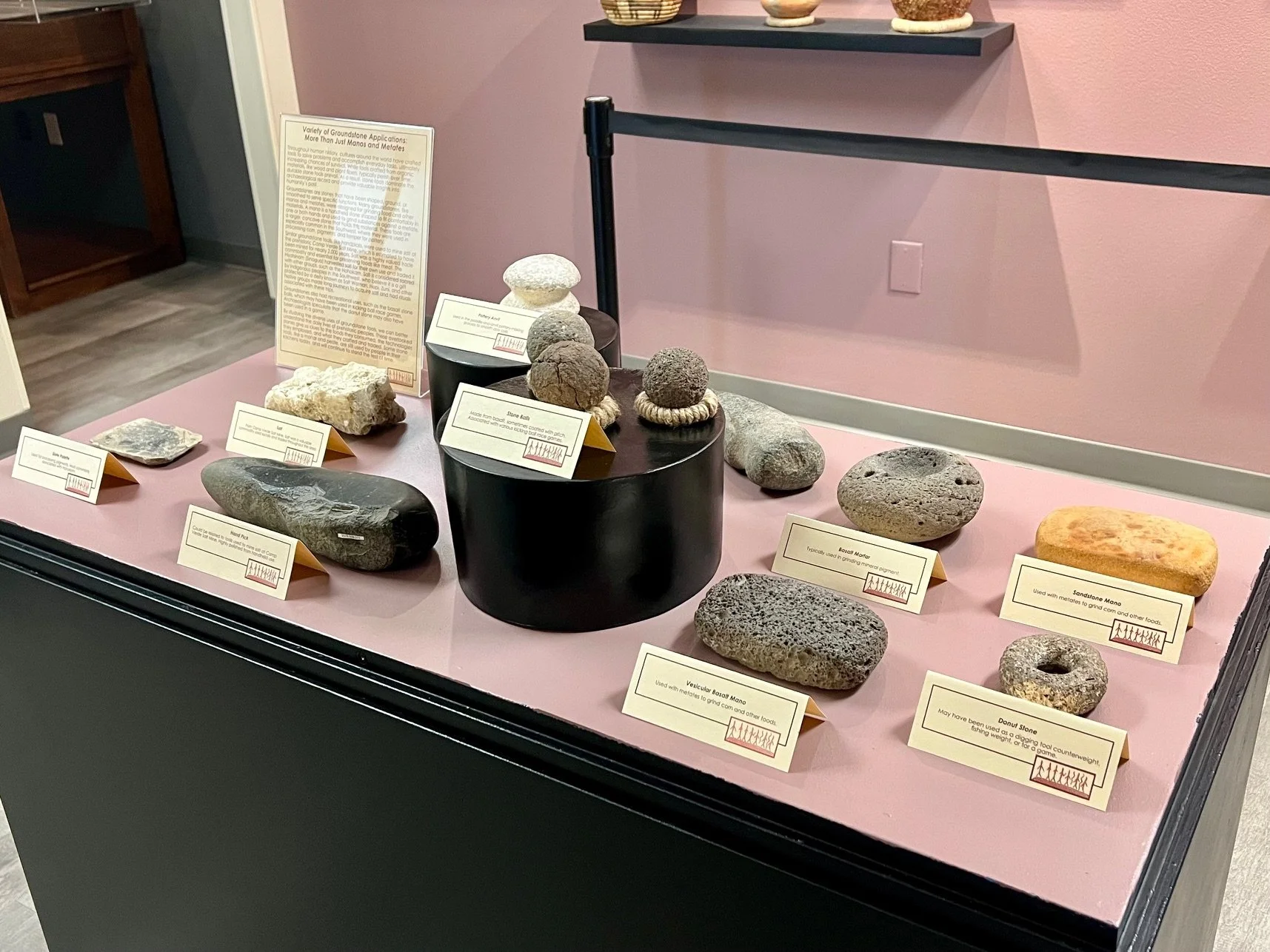
The exhibit features a case of groundstones that shows their wide range of uses. Groundstones are typically associated with manos and metates, especially in the Southwest where they were used in grinding corn, pigments, and temper for pottery. This case shows the ingenious ways prehistoric peoples transformed rocks into tools, like handpicks for mining salt, or as balls for recreation.
A second case tells the story of pottery from raw clay to finished vessels, showing the tools used in the manufacturing process.
An assortment of baskets and pottery adorns the space’s back wall, highlighting the distinct pottery styles of different groups and the ceramic trade in the Southwest. One item resembling a teacup may be an example of Mojave pottery produced for the tourist trade in the late 19th to early 20th centuries. Although this “teacup” shape reflects European influences present in the region, Native American groups have long used herbal teas for medicinal and ceremonial purposes. Various Southwestern groups brew a medicinal tea from the ephedra plant, a woody shrub whose stems contain caffeine and ephedrine. Also known as Indian tea or Mormon tea, this remedy has been used to treat a variety of illnesses.
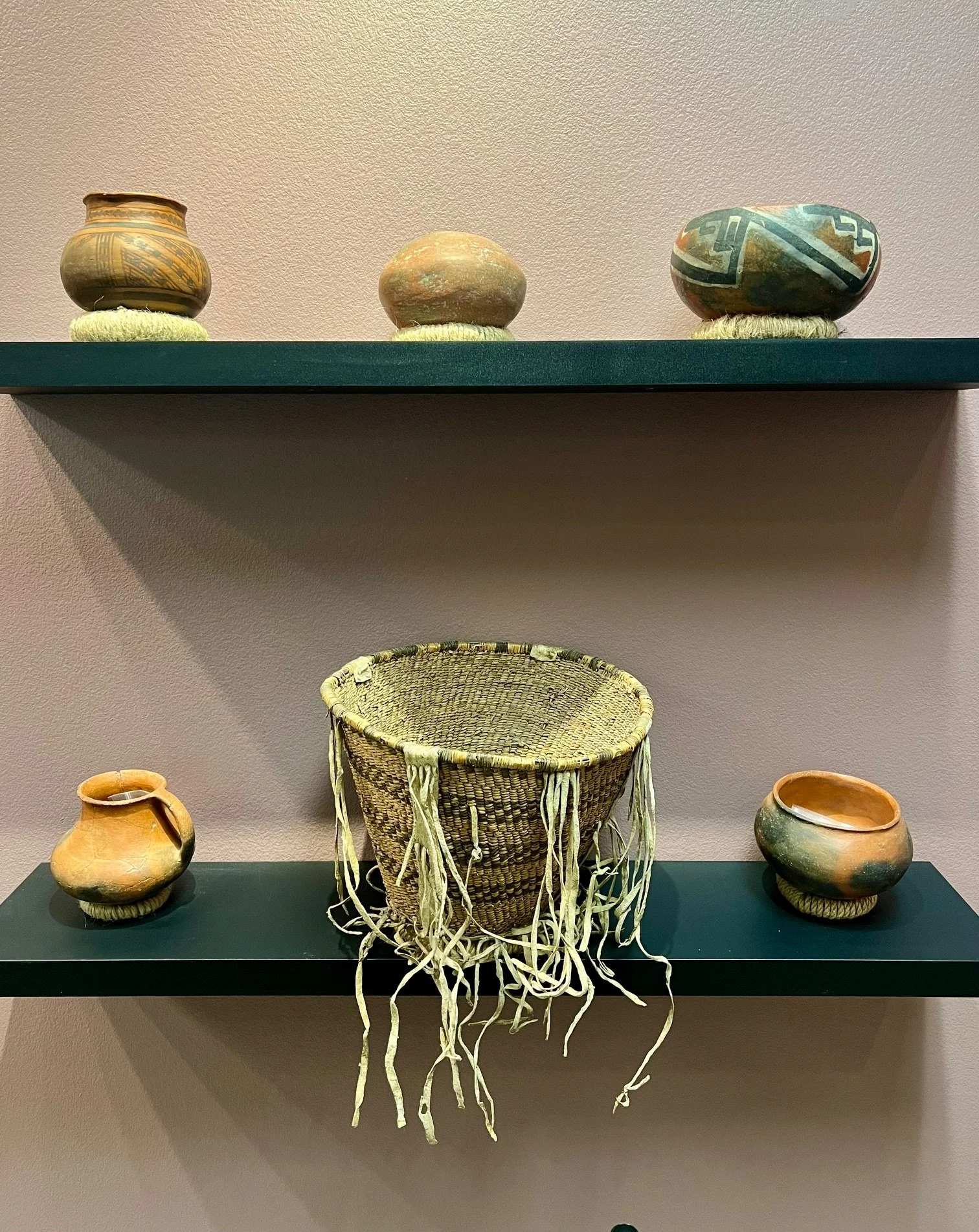
Finally, the basketry selection reminds the viewer that while basket making is one of the oldest Native American crafts, it remains vibrant in Tribal life today. At Hopi, for example, baskets hold central roles in harvest ceremonies and rites of passage for young girls.
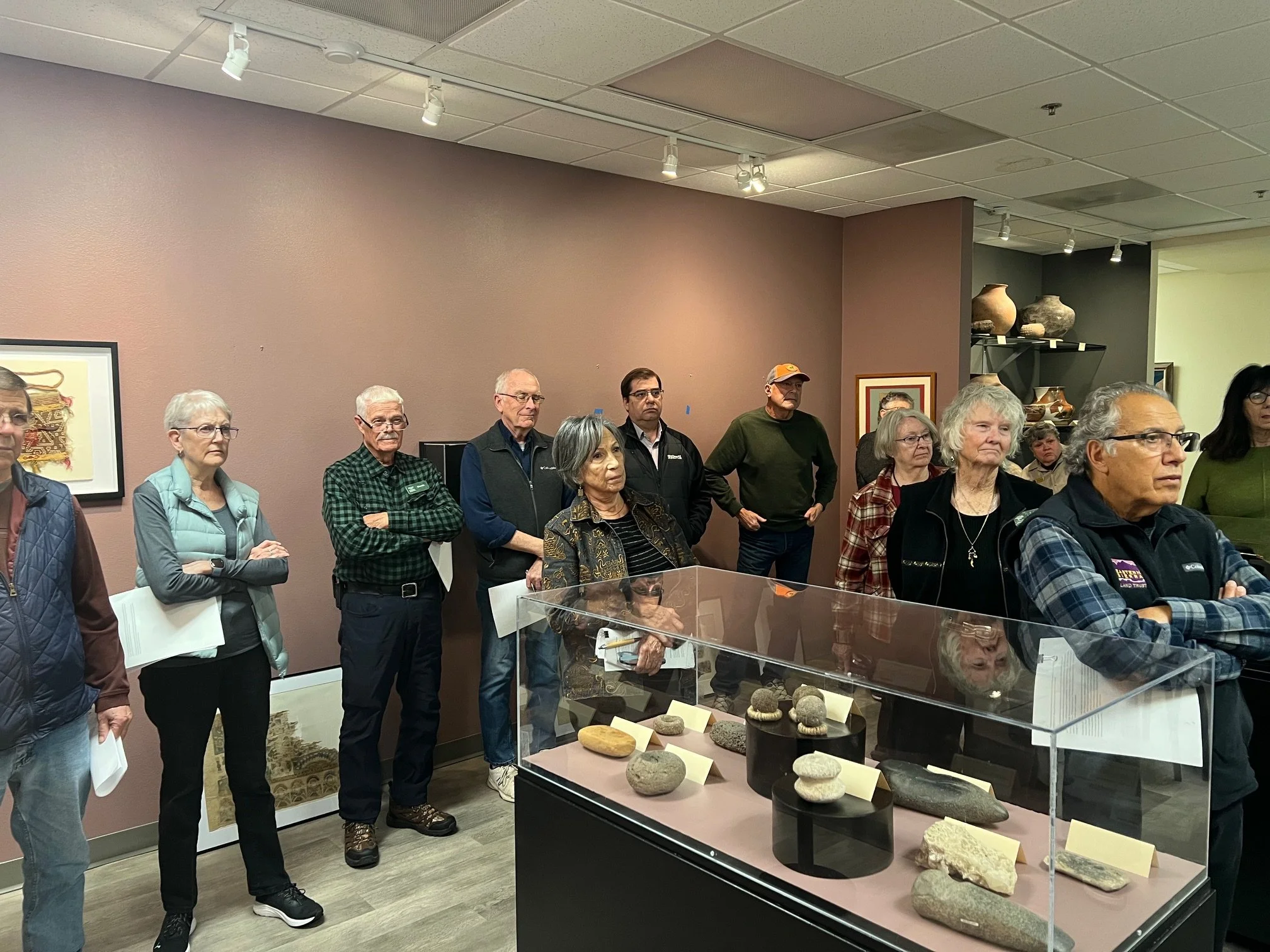
Volunteers at training meeting
Our museum typically hosts rotating exhibits on loan from other cultural institutions or the National Park Service. However, it's important that visitors and members are acquainted with the variety of objects we steward on a permanent basis.
At VVAC, we have limited space in our repository and are thus very selective with what we can store.
“Even though geographically Peru is a great distance away from the American Southwest, the cultural themes cannot be denied,” Monica Buckle, VVAC’s Executive Director, explained. “The Kovacovich Textile Collection has similar cultural themes and weaving techniques that the ancestral Hopi used here in the Verde Valley. With the various parallels, it was evident that we would accept these ancestral Peruvian textiles into our permanent collection.”
Textiles, as well as other items like lithics and baskets, have long connected people across time and space, linking different cultures through trade and the exchange of ideas. Although viewing these pieces centuries later, a sense of universal kinship can be felt that ties the cultural thread of humanity together.
“As director of the museum, it's important that our exhibits are rotating continuously,” Buckle said. “We want the community to know there's always going to be something new on display. We have travelers coming from across the United States coming to visit us, as well as international visitors who make us a destination. Nonetheless, it's essential that there's always something fresh for our membership and for the local Verde Valley community.”
“All of us at VVAC are aligned with the fact that we have this fabulous museum space, and we truly want to bring interesting programs and exhibits to the public,”Buckle continued. “The fact that we have ancestral Peruvian artifacts on view brings a different element for learning and engagement that is not expected in a rural region.”
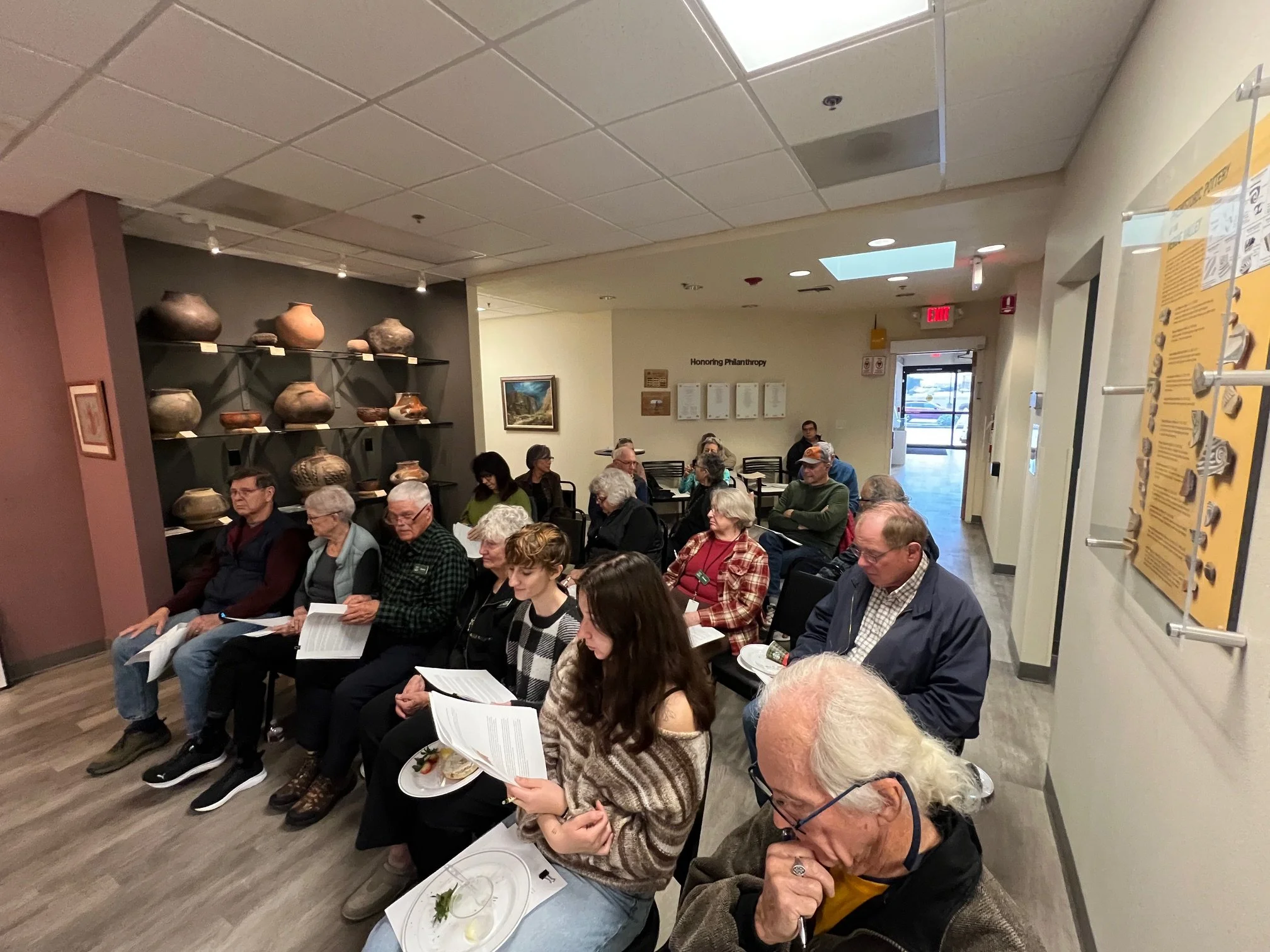
Volunteer training meeting
“I am grateful to have an extremely talented scope of colleagues to work with, both staff and volunteers, who bring their expertise with work that happens behind the scenes,” Buckle added.
Additionally, Buckle hosted a docent breakfast training to equip volunteers with a comprehensive understanding of the materials on display. Docents serve as museum ambassadors and act as educators to visitors.
The textile display was thoughtfully curated by Adele Furby, Master Weaver, and Linda Douville, Textile Specialist. Both Adele and Linda have been identifying weave structures and preserving the textiles of the museum’s Dyck Collection, elevating VVAC’s conservation methods. Adele identified and described the weaving structure of each textile on display, while Linda mounted and framed each textile.
Margaret Hangan, Director of Collections, was instrumental in co-developing the exhibit. Jerry Morris, Volunteer Facility Manager and Exhibit Preparator, helped with all aspects of exhibit installation. Lab Volunteers Keith and Jeannie Greiner curated the groundstone and pottery display. Betty Goodwin, Volunteer Docent, formatted and printed the exhibit text. Alyssa Smith, Journalist and Social Media Manager, wrote the exhibit narratives, taking into consideration how each piece would resonate with a visitor while weaving together a story.
This exhibit will be on view until late Spring 2026.
Please note, VVAC is a NAGPRA (Native American Graves Protection and Repatriation Act) compliant organization. We adhere to the latest guidelines in collection management put in place by the United States Secretary of the Interior.