On April the 25th 2026, the Verde Valley Archaeology Center and Museum opened the exhibit Tim’s Cave Reimagined: Stewarding A Cultural Collection, which re-envisions the narrative surrounding a prehistoric site while weaving in the importance of Tribal collaboration and visiting with respect.
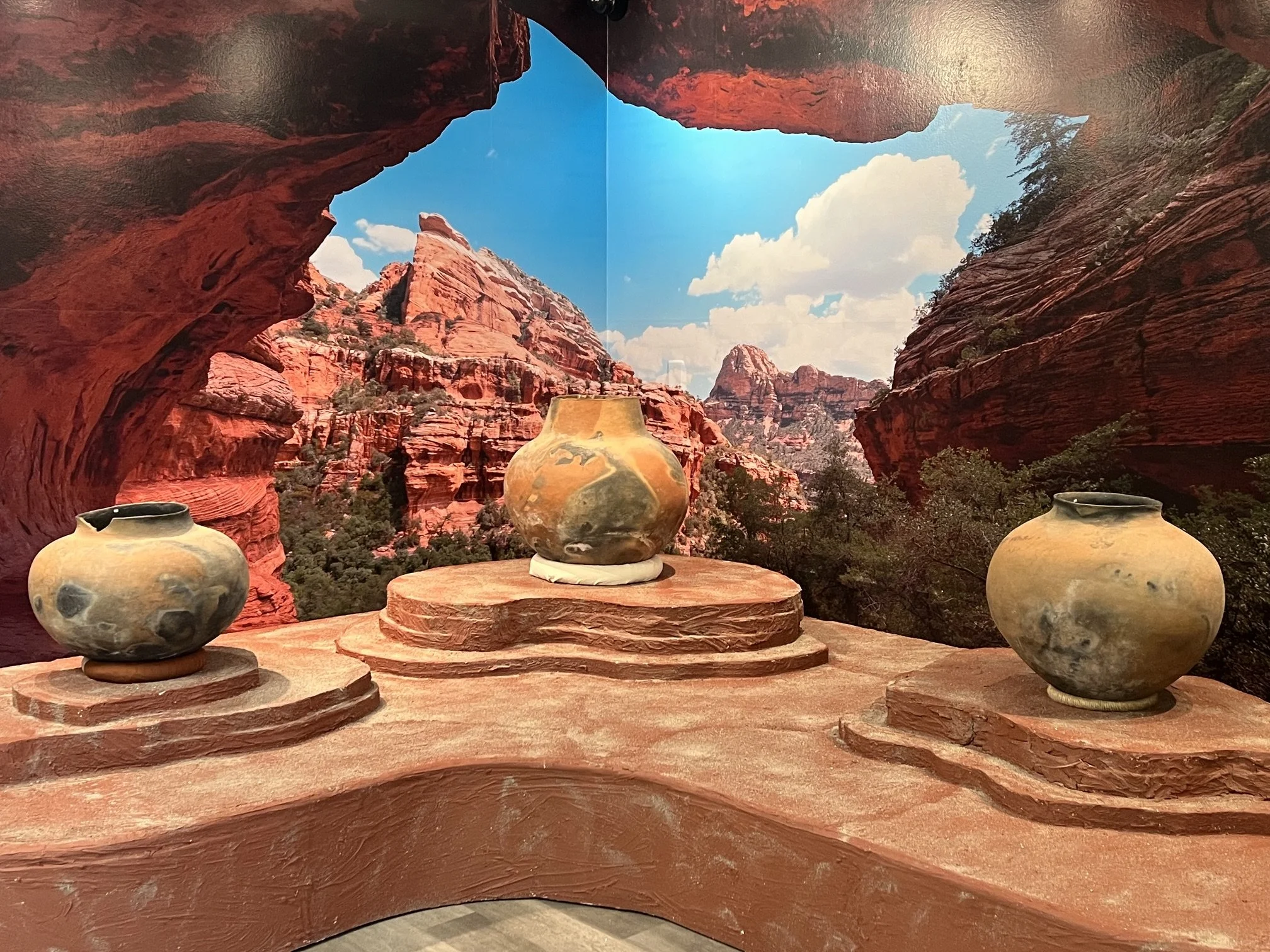
In 2024, VVAC became the permanent custodian to the collection of artifacts originating from a dwelling near Sedona, commonly referred to as Tim’s Cave. This cliffside alcove was used by the Sinagua, or Hisatsinom, the Hopi name for "The Ancient Ones", who left the objects nearly 800 years ago.
The Hisatsinom were a prehistoric culture who inhabited the region below and on top of the Mogollon Rim around the Verde Valley and Flagstaff. They thrived in the Verde Valley for several hundred years until approximately AD 1400, when they left the area for reasons that remain unclear. When the inhabitants of this site departed the region, they left behind ollas of significant size, with the largest measuring two feet in diameter and weighing nearly 50 pounds.
“For me as an archaeologist, the most interesting thing is, what were they doing there?” Peter J. Pilles, Jr. said. Pilles was the Forest Archaeologist at Coconino National Forest at the time and in charge of the recovery.
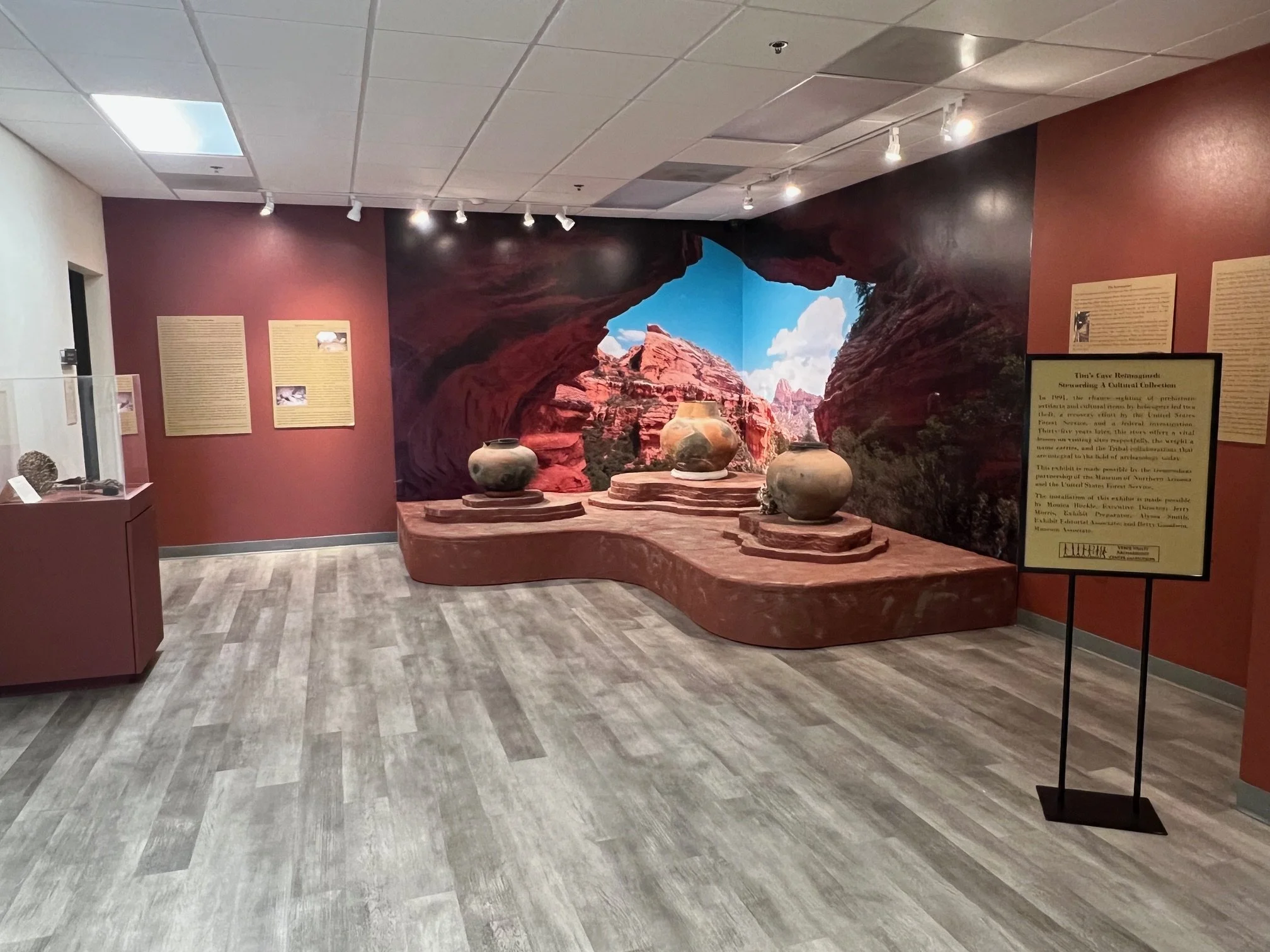
The findings from the artifacts imply that the Sinagua were much more socially complex than had previously been believed. Three of the jars are classified as Tuzigoot Plain, unglazed ceramics that were made locally, but the largest olla is categorized as Wingfield Plain, which must have been traded and carried over a significant distance. The size and number of pots in the cave indicate that they were most likely used on special occasions and owned by multiple families in the community.
These items sat at the mouth of the cave until 1991, when a chance sighting by helicopter led to multiple thefts, a recovery effort by the United States Forest Service (USFS), and a federal investigation. One of the passengers on the helicopter had been on the tour in honor of his brother Tim, who had previously worked with Peter J. Pilles Jr. After making the connection, the site was called Tim’s Cave. The exhibit explores how the naming of cultural and heritage sites involves Tribal collaboration in present-day.
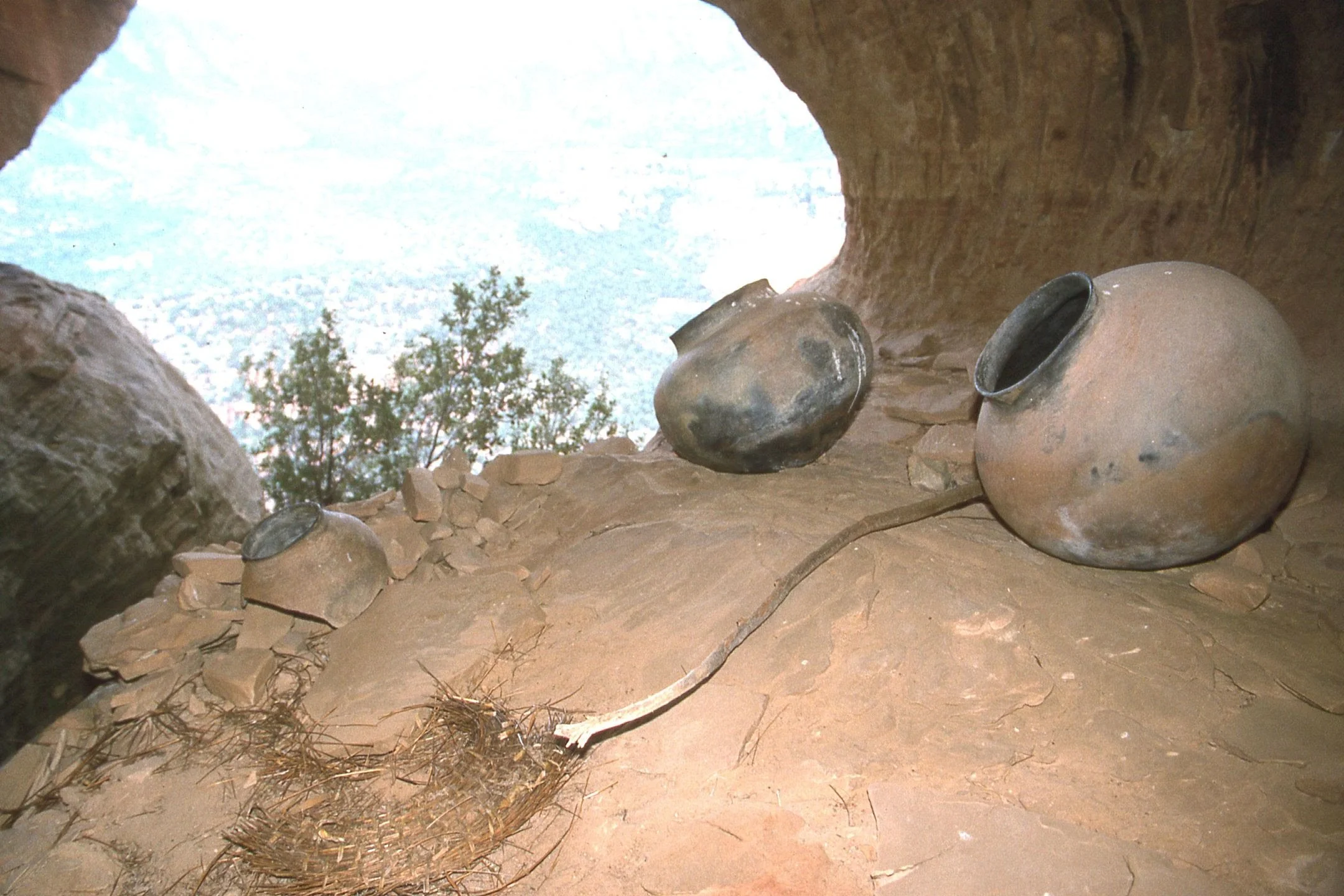
Photo Courtesy of Peter J. Pilles Jr.
Since the site had been exposed and artifacts were stolen, the Forest Service initiated a recovery effort to remove and document the artifacts. Pilles led a 13-person crew including John Whittaker, Neil Weintraub, Archaeologist for the Kaibab National Forest, and other USFS employees to retrieve the remaining artifacts.
The theft prompted a federal investigation that made national news, and the stolen items gained so much publicity that the thief realized it would be impossible to sell them. After 15 months, the artifacts were returned to the Yavapai-Prescott Tribe in Prescott, Arizona, although the items are attributed to the Ancestral Hopi.
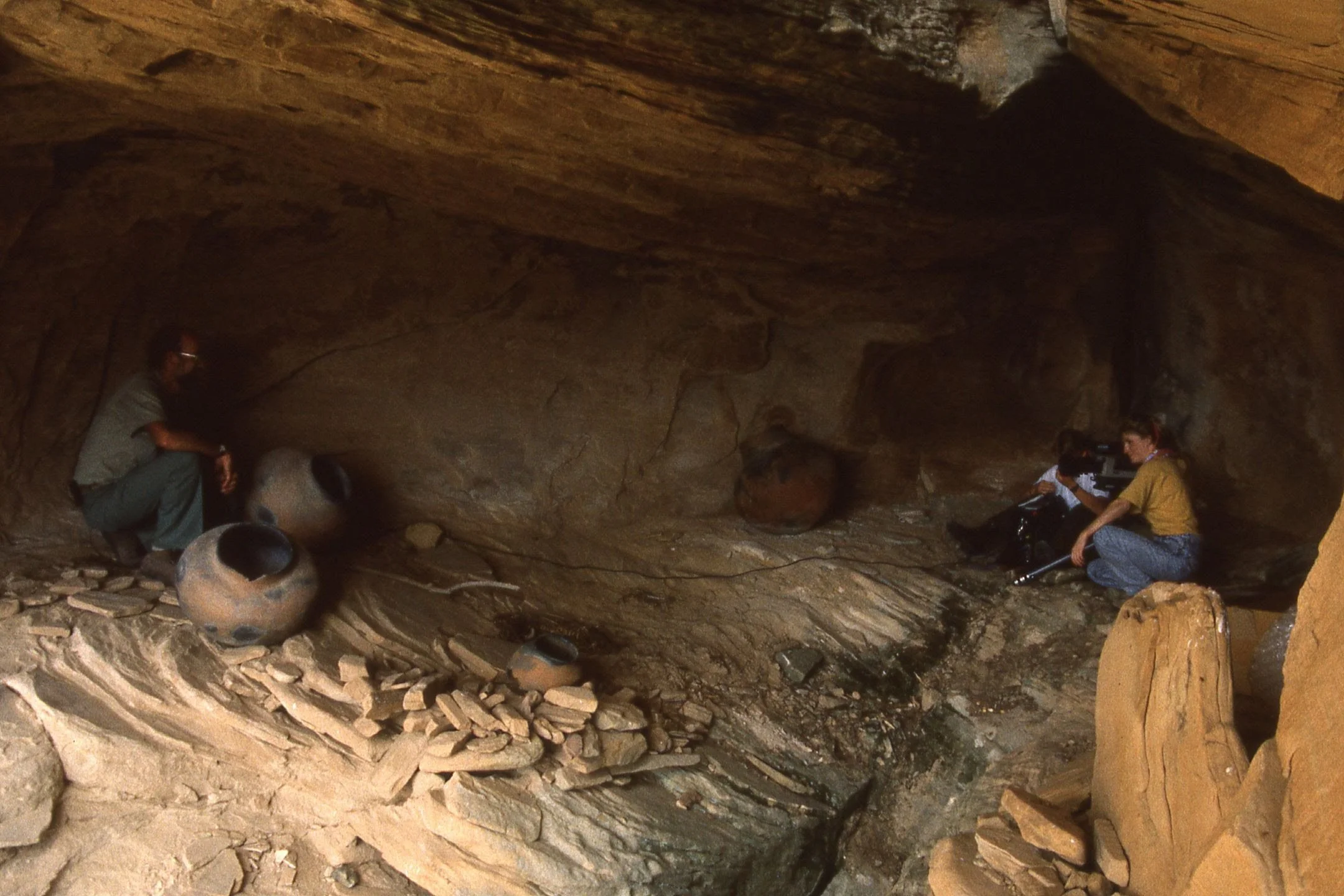
Photo Courtesy of Peter J. Pilles Jr.
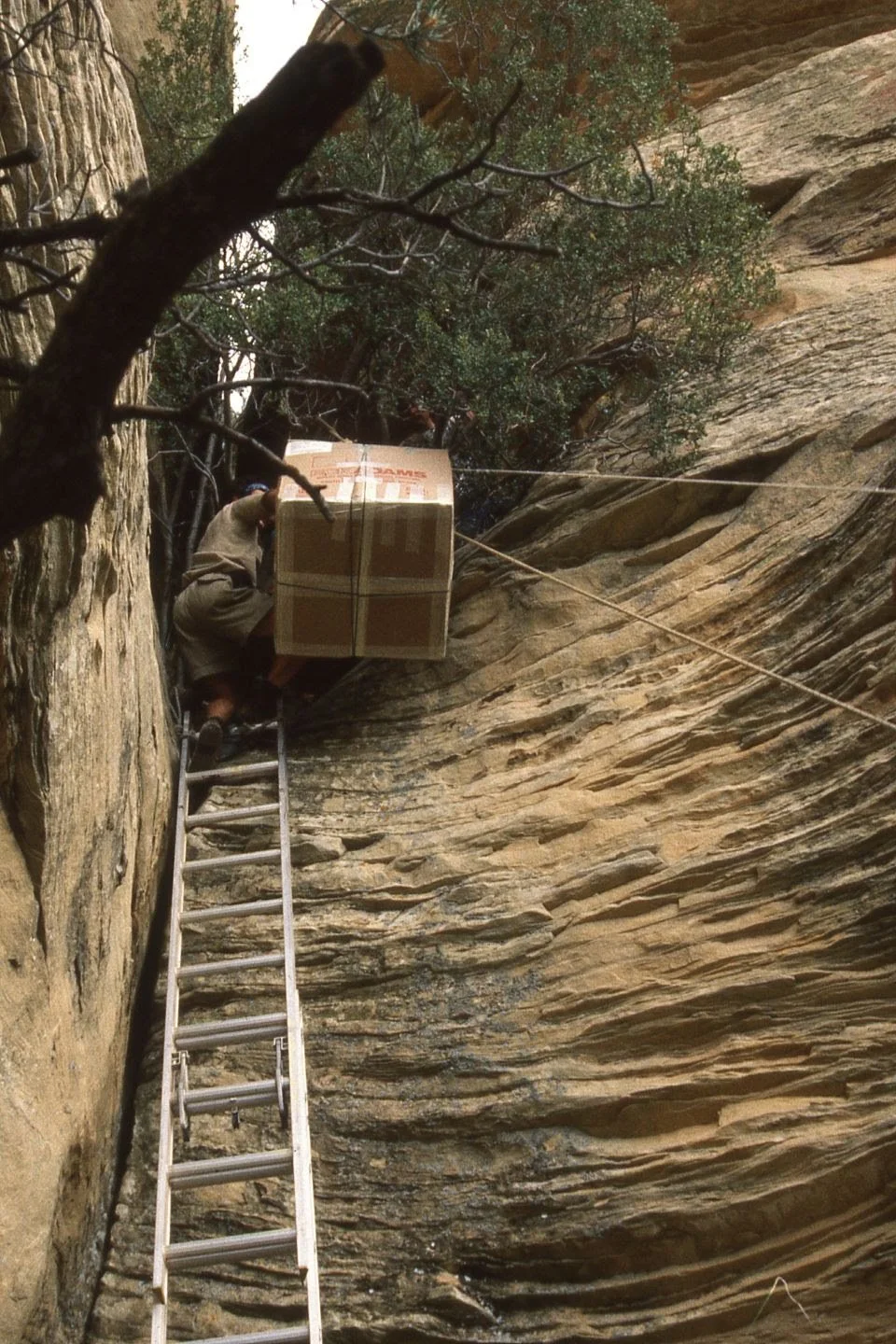
Photo Courtesy of Peter J. Pilles Jr.
The items were then turned over to the Forest Service, who placed the artifacts at the Museum of Northern Arizona (MNA) to be catalogued and safely stored. MNA responsibly stewarded these cultural items until December 2024 when they transferred to VVAC.
“As a museum, we serve as stewards to a comprehensive Ancestral Hopi collection, and with that comes an immense responsibility and reverence for the culture of today and the culture of long ago,” Monica Buckle, VVAC’s Executive Director, said. “At VVAC, it is our understanding that Tribal perspectives, traditions, and knowledge are of considerable value."
The exhibit highlights the achievements of the Hisatsinom, like their pottery manufacturing and complex social structures, and emphasizes the importance of collaborating with Tribes when naming cultural and heritage sites. While telling this intricate story, the exhibit also features simple ways people can enjoy sites while visiting them respectfully.
“As stewards of the Tim’s Cave collection, we recognize that this site and its contents belonged to different people,” Buckle continued. “We honor that there was most likely a name for this site that the Hisatsinom called this place 800 years ago. To respect cultural traditions and cultural continuity, we are reimagining what this narrative has been for 800 years to now: the people that have come and gone, the people that have migrated through the region, and the people who are still here on the land.”
On Saturday, April the 25th, VVAC held an opening reception for the exhibit. Ted Pavatea (Hopi/Tewa) and his grandson Brendon (Hopi/Tewa) drummed and sang to welcome the cultural material to VVAC, and Peter J. Pilles Jr. spoke about his experience at the site working as the Forest Archaeologist.
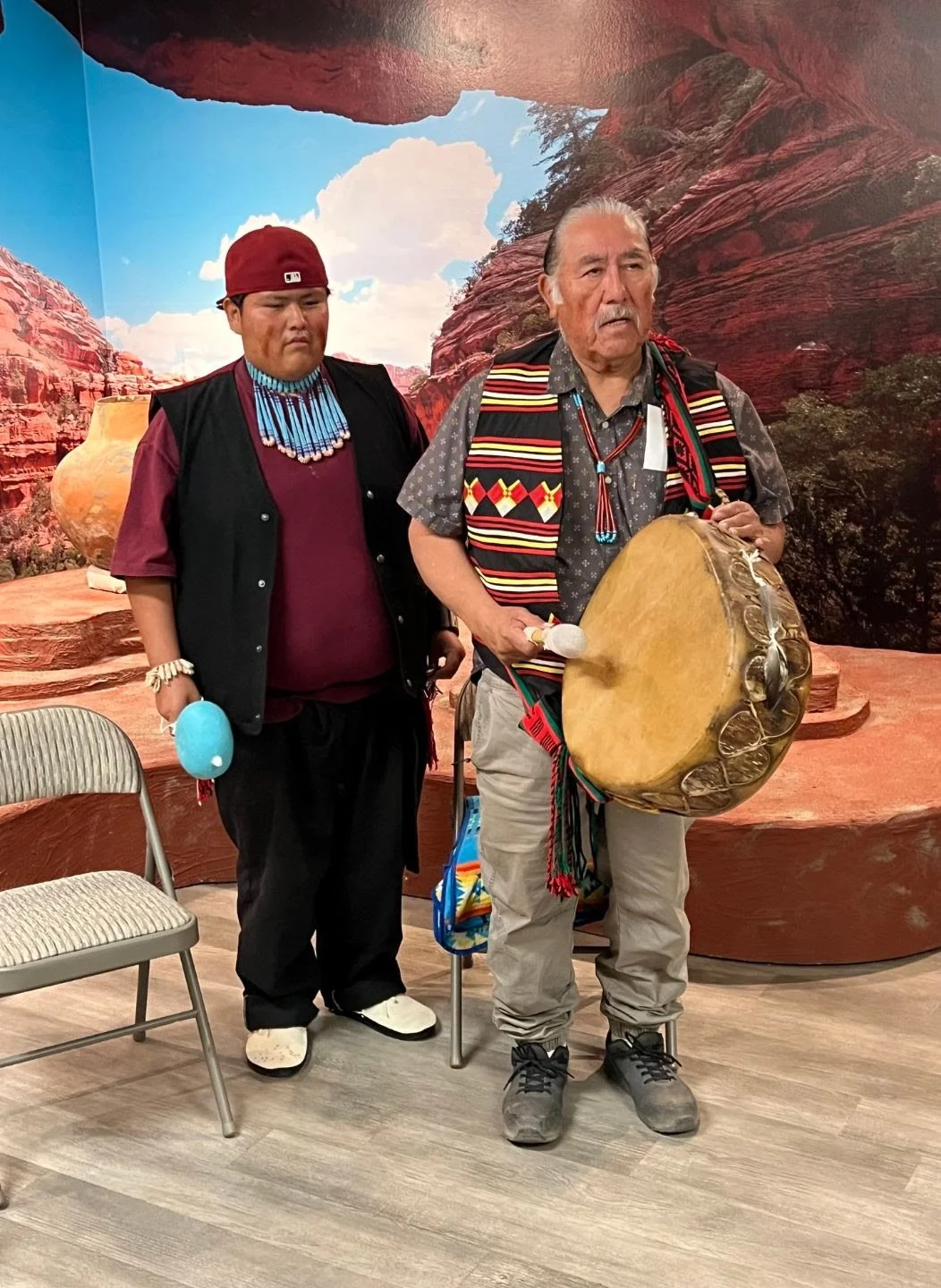
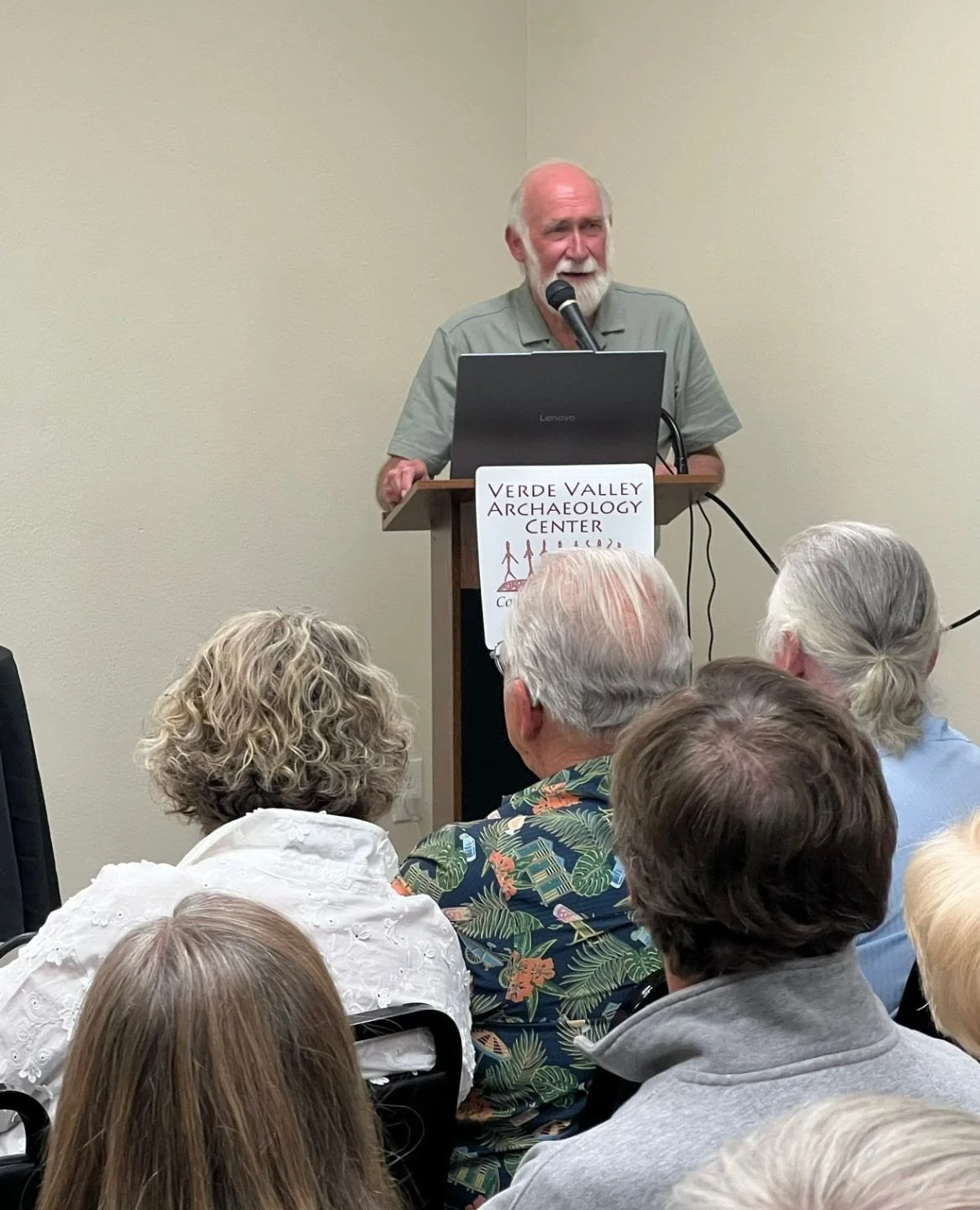
“Archaeology is a window to the past, but most importantly, archaeology serves as a bridge to the future,” Buckle said. “Through the study of cultural and heritage sites, not only do we have a better understanding of the peoples of the past, but we have a better appreciation for the descendant communities of today."
Thirty five years later, this story offers an important lesson on visiting sites respectfully, the weight a name carries, and the Tribal collaborations integral to archaeology today.
The exhibit will be on view for one year. The museum is currently operating on a Summer schedule and is open Thursdays, Fridays, and Saturdays from 10 a.m. to 4 p.m. with last admission at 3 p.m. until Labor Day. Please check VVAC's website for up-to-date opening hours and closings for special events and federal holidays.