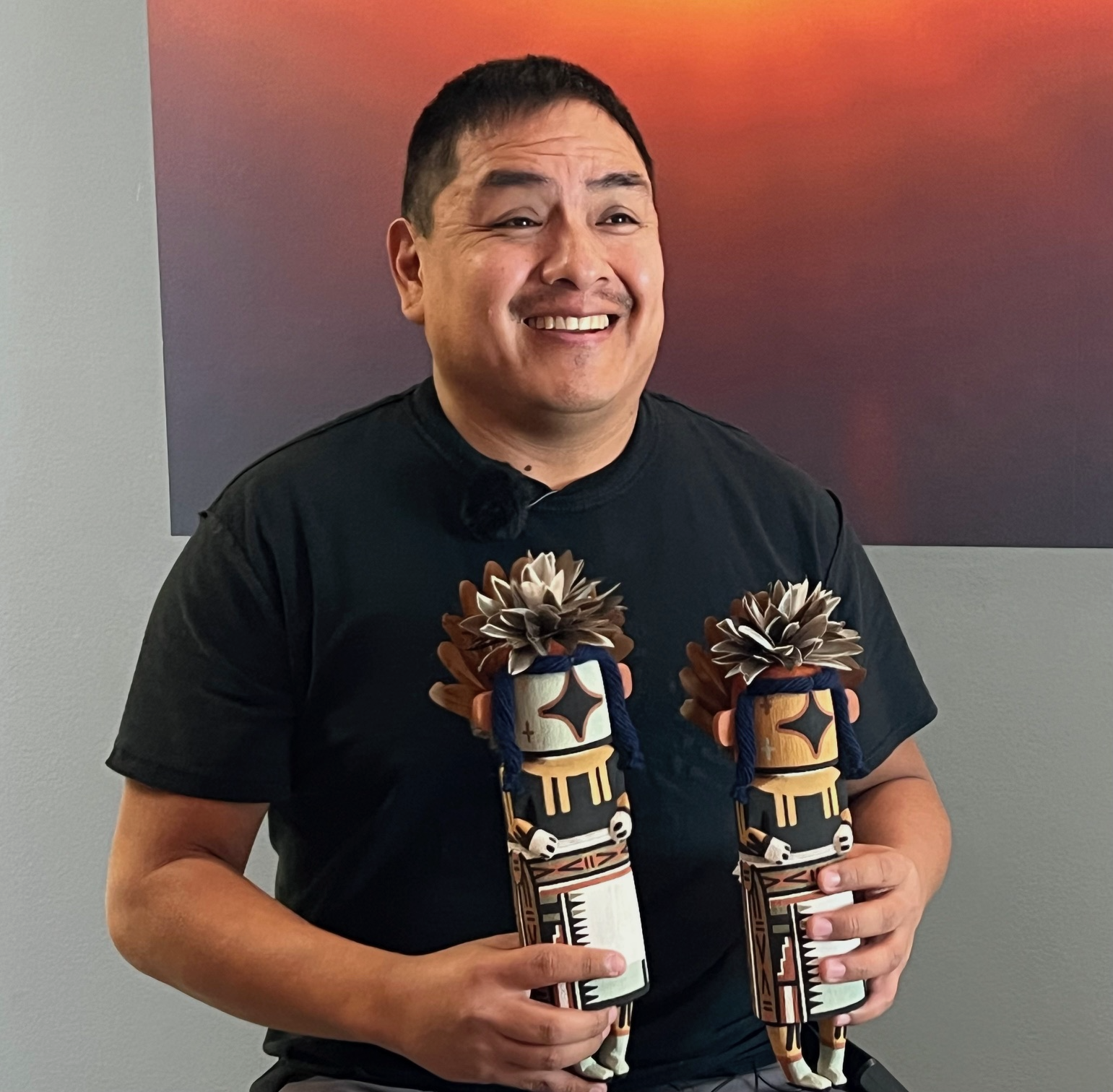
Katsina Conversation with Makwesa Chimerica (Hopi, of the Fire Clan from Mungapi)
Thursday, February the 12th at 3:00pm
Located at VVAC
Complimentary Reception to Follow
Free and Open-to-the-Public
Join us at the museum for an insightful conversation with renowned traditional Katsina Carver and Artist, Makwesa Chimerica (Hopi, of the Fire Clan from Mungapi) and Monica Buckle, VVAC’s Executive Director (Cherokee Nation).
The conversation will explore Hopi symbolism and the specific purposes for each Katsina. Makwesa’s Katsinas are held in private and public collections both domestically and internationally. Makwesa ethically sources organic materials from the Four Corners region to create these traditional spirit beings.
Following the talk a complimentary reception will be provided with hors d’oeuvres, wine, and non-alcoholic beverages. Makwesa will have his original Katsinas creations available for sale the day of the event. Please note, all proceeds directly benefit the artist and his family.
“Katsinas are spirit beings who are intermediaries between the Hopi and their deities, carrying the prayers of the Hopis for the continuation of the cycle of life of all living things. They may represent the spirit of plants, animals, forces of nature, places or even other tribes. Some are known for their duties, not all names are translatable. They appear in the kiva and plazas in Hopi villages for approximately 6 months of the year as they dwell in the Katsina or spirit world for the other half of the year. Katsina dolls are carved from the root of the cottonwood tree, used because the cottonwood grows only where there is an consistent supply of water, rare around the Hopi mesas and because of the water seeking nature of the roots, which can grow out and down a couple hundred feet or more. When aged, cottonwood root is a preferred wood used among Hopi carvers due to how they are able to adapt to the wood while creating Katsina dolls. The 26 years I have been carving has been a rewarding experience. The Highs and Lows has defined me on who I am today, giving the outside world a little glimpse into who the Hopi people are through my carvings. Hopi, a very complex culture is something I am very proud to be a part of. Carrying the traditions in dry farming, being very culturally active identifies you as Hopi. I have always practiced to carve my Tihu (Hopi name for Katsina doll) in giving each doll the correct representation of how I would see them in physical form. The meaning of each symbol represented are all tied into the Hopi culture and prophecy. To Hopi, is to observe, experience and listen, those are the important ways of learning. Kastinum, are a symbol of Qasti (Hopi word for life) moisture and good for humanity.”
-Makwesa Chimerica (Hopi, of the Fire Clan from Mungapi)
Seating for this event is available on a first-come, first-served basis.