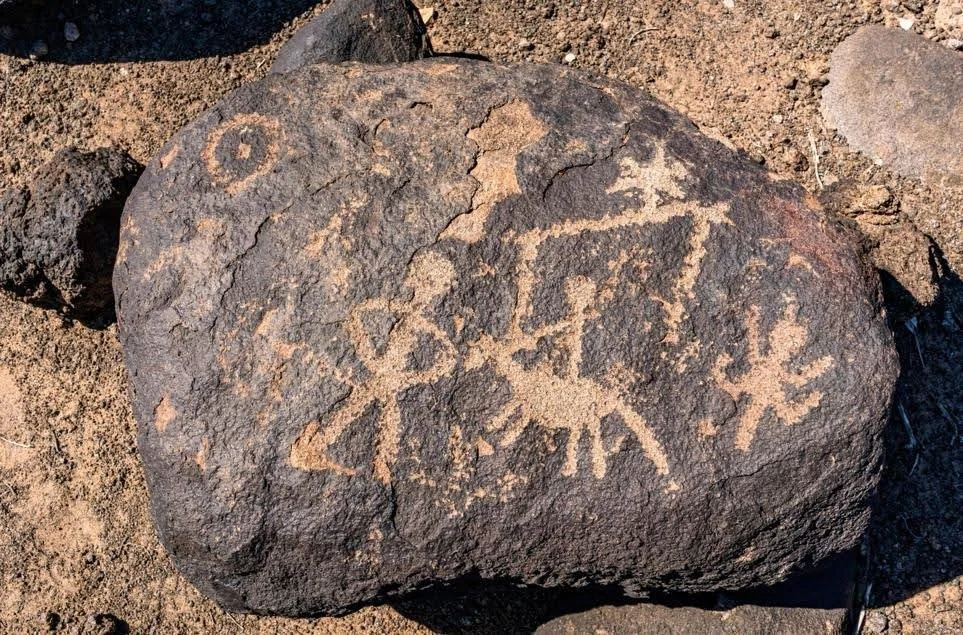
Following Their Footsteps: Indigenous Geography and the Anza Expedition of 1775-1776
Presented by Aaron M. Wright, Ph.D.
Thursday, February the 5th at 3:00pm
Located at VVAC
Complimentary Reception to Follow
Join us at the museum for a riveting talk. Spanish colonialism succeeded in part by co-opting Indigenous knowledge, resources, and infrastructure—including methods for navigating difficult and dangerous terrain unfamiliar to the colonizers. A prime example is the 1775–1776 overland expedition from the Sonoran missions to the Pacific Coast led by Captain Juan Bautista de Anza, launched to claim and colonize the San Francisco Bay, then a remote harbor in Alta California critical to Spain’s expanding presence in the Americas. In recognition of the expedition’s 250th anniversary, this presentation shares findings from recent archaeological investigations that reveal how the expedition relied on an established Indigenous trail network to successfully traverse the Sonoran Desert—arguably the most challenging segment of the five-month, 1,800-mile journey.
Aaron M. Wright is a preservation anthropologist with Archaeology Southwest, a nonprofit organization based in Tucson, Arizona. He specializes in the cultural landscapes of southern and western Arizona, focusing on the Huhugam and Patayan archaeological traditions. Dr. Wright’s scholarship and service have earned multiple honors, including most recently the Arizona Archaeological Society’s Professional Archaeologist Award (2023) and the American Rock Art Research Association’s Castleton Award (2025).
His book-length publications include Leaving Mesa Verde: Peril and Change in the Thirteenth-Century Southwest (2010, co-edited with Tim Kohler and Mark Varien), the award-winning Religion on the Rocks: Hohokam Rock Art, Ritual Practice, and Social Transformation (2014), The Great Bend of the Gila: Contemporary Native American Connections to an Ancestral Landscape (2016, with Maren Hopkins), and his most recent work, Sacred Southwestern Landscapes: Archaeologies of Religious Ecology (2024).
Seating is limited and available on a first-come, first-served basis.
Following the presentation join us for a complimentary reception
of hors d’oeuvres, wine, and beverages.